
Understanding FICO Score Impact: Your Financial Blueprint
FICO score impact

Understanding FICO Score Impact: Your Financial Blueprint

Professional man examines paperwork with magnifying glass at office desk, highlighting attention to detail.Photo: RDNE Stock project / Pexels

Understanding FICO Score Impact: Your Financial Blueprint

Master your FICO score to unlock better loans, lower interest rates, and achieve your financial dreams.

Boost Your Score Now

Key Takeaways

  • ✓ Your FICO score is a three-digit number representing your creditworthiness.
  • ✓ Payment history is the most significant factor, accounting for 35% of your score.
  • ✓ Higher FICO scores lead to better interest rates on loans and credit cards.
  • ✓ Regularly checking your credit report helps identify errors that could harm your score.

How It Works

1
Access Your Credit Report

Obtain your free annual credit reports from Equifax, Experian, and TransUnion. This gives you a baseline of your financial standing.

2
Identify Key Factors

Pinpoint the specific elements influencing your FICO score, such as payment history, amounts owed, and length of credit history. Understanding these helps you prioritize.

3
Develop a Strategy

Create a personalized plan to address negative factors and bolster positive ones. This might involve setting up payment reminders or consolidating debt.

4
Monitor and Adjust

Continuously monitor your credit score and reports for changes and new opportunities. Financial health is an ongoing process, requiring regular attention.

Demystifying the FICO Score: What It Is and Why It Matters

African American man holding envelope emphasizing credit card debt relief options.Photo: RDNE Stock project / Pexels
The FICO score, a three-digit number ranging from 300 to 850, is arguably the most critical metric in your financial life. Developed by the Fair Isaac Corporation, it serves as a standardized assessment of your creditworthiness, giving lenders a quick snapshot of your reliability as a borrower. For many, understanding FICO score impact feels like deciphering a complex code, yet its influence is pervasive, touching almost every major financial decision you'll make. From securing a mortgage or an auto loan to even renting an apartment or obtaining certain insurance policies, your FICO score plays a pivotal role in determining approval, interest rates, and overall terms. A higher score signals lower risk to lenders, translating into more favorable conditions and significant savings over the life of a loan. Conversely, a lower score can lead to higher interest rates, stricter approval criteria, or even outright rejections, effectively closing doors to crucial financial opportunities. Beyond just loans, the impact of your FICO score extends to areas you might not immediately consider. Utility companies, cell phone providers, and even potential employers in sensitive positions sometimes review credit reports as part of their assessment processes. While they might not see your exact score, the underlying data influences their perception of your financial responsibility. This makes a deep understanding of what comprises your FICO score not just beneficial, but essential for navigating the modern financial landscape successfully. It's not merely a number; it's a reflection of your past financial behavior and a predictor of future reliability. Grasping the intricacies of its calculation and the factors that move the needle is the first step toward harnessing its power for your benefit. By taking control of your credit, you're essentially taking control of your financial future, opening up a world of possibilities that might otherwise remain out of reach. For a deeper dive into managing your overall financial health, explore strategies for financial planning. This foundational knowledge empowers you to make informed decisions and proactively manage your credit profile. Without a clear grasp of your FICO score, you're essentially navigating a crucial part of your financial journey blind, missing opportunities to optimize your spending and saving habits.

The Five Pillars: How Your FICO Score Is Calculated

Man drawing a pie chart on paper with coffee, representing business planning and analysis.Photo: Felicity Tai / Pexels
To truly grasp understanding FICO score impact, one must break down its calculation into its core components. FICO uses a sophisticated algorithm that considers five main categories from your credit report, each weighted differently to arrive at your final score. Understanding these weights is crucial for prioritizing your credit-building efforts. First and foremost is **Payment History**, which accounts for a substantial 35% of your FICO score. This category examines whether you've paid your bills on time. Late payments, bankruptcies, collections, and charge-offs can severely damage your score, while a consistent record of on-time payments is the single most important factor for a healthy score. Even a single 30-day late payment can have a noticeable negative effect, underscoring the importance of punctuality. Next, **Amounts Owed** makes up 30% of your score. This isn't just about the total amount of debt you carry, but more specifically, your credit utilization ratio—the amount of credit you're using compared to your total available credit. For instance, if you have a credit card with a $10,000 limit and a $3,000 balance, your utilization is 30%. Experts generally recommend keeping this ratio below 30% across all your credit accounts, with lower being better. High utilization suggests you might be over-reliant on credit, which lenders view as a risk. **Length of Credit History** contributes 15% to your score. This factor considers how long your credit accounts have been open, including the age of your oldest account, the age of your newest account, and the average age of all your accounts. A longer, established credit history generally indicates more experience managing credit responsibly, which is favorable. Closing old accounts, especially those with no annual fees, can sometimes shorten your average credit history and negatively impact this factor. **New Credit** accounts for 10% of your score. This looks at how many new credit accounts you've recently opened and how many hard inquiries have been made on your credit report. While opening new credit can be necessary, opening too many accounts in a short period suggests higher risk and can temporarily lower your score. Each hard inquiry, typically triggered when you apply for new credit, shaves a few points off your score. Finally, **Credit Mix** comprises the remaining 10%. This factor evaluates the different types of credit you have, such as installment loans (mortgages, auto loans) and revolving credit (credit cards). Demonstrating responsible management of various types of credit shows lenders you can handle different financial obligations. While not as heavily weighted as payment history or amounts owed, a diverse credit portfolio can positively influence your score. Understanding these five pillars is the fundamental framework for anyone looking to build or maintain excellent credit.

For more options, check out Sex toy Buying checklist.

Actionable Strategies for Improving Your FICO Score
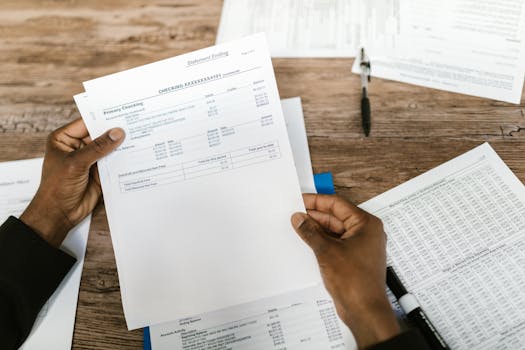
Hands holding financial papers for tax preparation and analysis.Photo: RDNE Stock project / Pexels
Now that you understand the components, let's explore actionable strategies for understanding FICO score impact and actively improving it. Boosting your FICO score is not an overnight process, but consistent effort in key areas can yield significant results over time. The most impactful strategy is to **pay all your bills on time, every time**. Since payment history is 35% of your score, even a single missed payment can cause a noticeable drop. Set up automatic payments for all your accounts to avoid accidental late payments. If you're struggling to make a payment, contact your creditor immediately to discuss options. It's always better to communicate than to simply miss a payment. Secondly, focus on **reducing your credit utilization ratio**. As discussed, this is 30% of your score. Aim to keep your balances below 30% of your available credit, and ideally even lower, around 10-20%. If you have multiple credit cards, consider paying down the ones with the highest balances first, or spreading your payments across cards to lower all utilization ratios. You can also request a credit limit increase on existing cards (without using the new credit) to instantly lower your utilization, though this might involve a hard inquiry. Third, **don't close old credit accounts**, especially those with a long history and no annual fees. These accounts contribute positively to your length of credit history (15% of your score). Even if you don't use them frequently, keeping them open and active (perhaps with a small, occasional purchase that you pay off immediately) helps maintain a healthy average age of accounts. Closing an old account can shorten your credit history and potentially increase your utilization if it removes available credit. Fourth, be mindful of **new credit applications**. While diversifying your credit mix (10% of your score) can be beneficial, applying for too much new credit in a short period can be detrimental. Each hard inquiry can temporarily lower your score, and opening multiple new accounts suggests higher risk to lenders. Apply for credit only when truly necessary and space out your applications. Finally, **regularly review your credit reports** for errors. You're entitled to a free report from each of the three major credit bureaus (Equifax, Experian, and TransUnion) annually. Check for incorrect late payments, accounts that aren't yours, or inaccurate balances. Disputing errors promptly can lead to their removal, potentially boosting your score. For more detailed guidance on handling debt, consider exploring effective debt management strategies. By diligently applying these strategies, you can take proactive steps toward a healthier FICO score and a more robust financial future.

Common FICO Score Mistakes to Avoid and Expert Tips

African American man holding envelope emphasizing credit card debt relief options.Photo: RDNE Stock project / Pexels
Navigating the world of credit can be tricky, and many people inadvertently make mistakes that negatively impact their FICO score. Understanding FICO score impact also means recognizing these pitfalls and actively avoiding them. Here are some common mistakes and expert tips to ensure your score remains strong or improves: **Common Mistakes to Avoid:** * **Missing payments:** This is the cardinal sin of credit. Even one payment that's 30 days late can drop your score by tens of points and stay on your report for seven years. * **Maxing out credit cards:** High credit utilization (using a large percentage of your available credit) signals risk to lenders and significantly lowers your score. It’s a common trap many fall into. * **Closing old, paid-off accounts:** While it might feel good to close an unused account, it can reduce your total available credit, thereby increasing your utilization ratio. It also shortens your average credit history, which is a key scoring factor. * **Applying for too much credit at once:** Each hard inquiry for new credit can temporarily ding your score. Multiple inquiries in a short period look desperate to lenders. * **Not checking your credit report:** Errors are surprisingly common and can negatively affect your score without your knowledge. Ignoring your report is like ignoring a potential leak in your financial roof. **Expert Tips for FICO Score Optimization:** * **Automate payments:** Set up reminders or automatic payments to ensure you never miss a due date. This is the simplest and most effective way to protect your payment history. * **Keep utilization low:** Aim for 10-20% utilization across all your revolving credit accounts. If you can't pay off balances entirely, distribute them strategically to keep individual card utilization low. * **Become an authorized user:** If a trusted family member with excellent credit adds you as an authorized user to their well-managed account, their positive payment history and low utilization can reflect on your report, boosting your score. Ensure they maintain good credit habits. * **Consider a secured credit card:** If you have poor or no credit, a secured card, backed by a deposit, can help you build positive credit history responsibly. * **Dispute errors immediately:** If you find inaccuracies on your credit report, dispute them with the credit bureau and the creditor. Gather documentation to support your claim. * **Be patient:** Improving your FICO score is a marathon, not a sprint. Consistent good habits over time are what truly make a lasting difference.

Comparison

FactorHigh FICO Impact (750+)Medium FICO Impact (650-749)Low FICO Impact (under 650)
Payment HistoryPerfect or near-perfect on-time paymentsOccasional late payments (30-60 days)Frequent late payments, collections, bankruptcies
Credit UtilizationBelow 10% on all accounts10-30% on most accountsAbove 50% on multiple accounts, often maxed out
Length of Credit HistoryAverage age of accounts 7+ yearsAverage age of accounts 3-7 yearsAverage age of accounts under 3 years
New CreditFew hard inquiries, stable accountsSome new accounts, a few hard inquiriesMany new accounts, frequent hard inquiries

What Our Readers Say

5 ★★★★★

"Before reading this, understanding FICO score impact felt like a mystery. Now I know exactly what to focus on. My score jumped 40 points in 3 months by just paying attention to utilization!"

5 ★★★★★

"The breakdown of the five pillars was incredibly clear. I realized I was making mistakes with closing old accounts. This article is a must-read for anyone serious about their finances."

5 ★★★★★

"Following the advice here, I disputed an error on my report and saw my score improve from 620 to 685. It made a huge difference in my car loan interest rate!"

4 ★★★★☆

"Very comprehensive guide. While some of the information I already knew, the actionable tips on credit utilization were particularly helpful. I appreciate the emphasis on long-term habits."

5 ★★★★★

"As someone just starting to build credit, this article was a lifesaver. It laid out a clear path to follow without feeling overwhelming. I feel much more confident about my financial future now."

Frequently Asked Questions

What is a good FICO score, and what range should I aim for?
A 'good' FICO score typically starts around 670, but 'very good' is 740-799, and 'exceptional' is 800-850. Aiming for at least 740 is ideal, as it generally qualifies you for the best interest rates and loan terms, saving you substantial money over time.
Will checking my own FICO score lower it?
No, checking your own FICO score or credit report is considered a 'soft inquiry' and does not affect your score. Only 'hard inquiries,' which occur when you apply for new credit, can temporarily lower your score.
How often should I check my credit report and FICO score?
You should check your credit report from each of the three major bureaus at least once a year via AnnualCreditReport.com. Many credit card companies and banks also offer free FICO score monitoring, which you can check monthly to track progress.
Is it better to pay off a credit card balance in full or make minimum payments?
It is always better to pay off your credit card balance in full each month. This avoids interest charges and keeps your credit utilization ratio at 0%, which is optimal for your FICO score. If you can't pay in full, pay as much as you can above the minimum.
How do FICO scores differ from VantageScore?
Both FICO and VantageScore are credit scoring models, but they use slightly different algorithms and weighting factors. FICO is older and more widely used by lenders (about 90%), while VantageScore is newer and often provided by free credit monitoring services. While they're similar, FICO is generally the score lenders rely on most.
Who benefits most from understanding FICO score impact?
Anyone seeking financial stability and better access to credit benefits greatly. This includes first-time homebuyers, individuals looking to refinance loans, those applying for new credit cards, or anyone wanting to improve their financial health and save money on interest.
What are the risks of having a low FICO score?
A low FICO score can lead to higher interest rates on loans, difficulty getting approved for credit cards or mortgages, higher insurance premiums, and even challenges in renting an apartment or securing certain jobs. It effectively makes financial life more expensive and restrictive.
How might FICO scoring evolve in the future?
Future FICO models are exploring incorporating 'alternative data' like rent payments, utility bills, and bank account activity for consumers with thin credit files. This could potentially help more people gain access to credit, making the scoring system more inclusive, though the core pillars are expected to remain.

Mastering your FICO score is not just about a number; it's about unlocking better financial opportunities and achieving your goals. Start applying these strategies today to take control of your financial future and experience the profound impact of a strong FICO score.

Topics: FICO score impactcredit score explainedimprove credit scorefinancial healthcredit reporting
Leo List
Brampton weed
Adultwork