Unlock Growth: Open a High Yield Savings Account Today
open a high yield savings account

Unlock Growth: Open a High Yield Savings Account Today

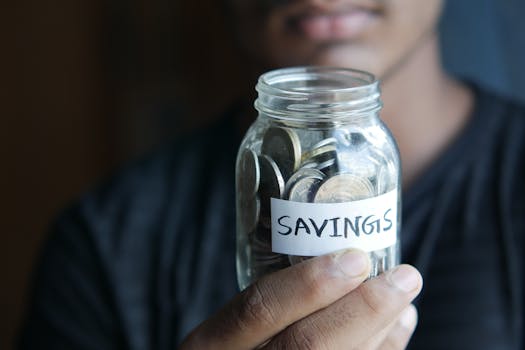
A close-up image of a person's hand holding a jar full of coins labeled 'Savings'.Photo: Towfiqu barbhuiya / Pexels

Unlock Growth: Open a High Yield Savings Account Today

Boost your financial future by earning significantly more on your savings with a high-yield account.

Start Earning More

Key Takeaways

  • ✓ High-yield savings accounts (HYSAs) offer significantly higher interest rates than traditional savings accounts.
  • ✓ Most HYSAs are offered by online banks, which have lower overhead costs.
  • ✓ Your money in an HYSA is FDIC-insured up to $250,000 per depositor, per bank.
  • ✓ Opening an HYSA is typically a straightforward online process, often taking less than 15 minutes.

How It Works

1
Research and Compare Options

Look for banks offering competitive APYs, low fees, and features that align with your financial needs. Consider online-only banks for the best rates.

2
Gather Required Information

You'll typically need your Social Security number, a valid ID, and routing/account numbers from an existing checking account for initial funding. Ensure all documents are easily accessible.

3
Complete the Online Application

Visit the bank's website and follow the prompts to fill out the application form. This usually involves personal details, contact info, and security questions.

4
Fund Your New Account

Once approved, you'll transfer funds from your existing bank account to the new HYSA. This can often be done via electronic transfer (ACH).

Understanding High-Yield Savings Accounts and Their Benefits

Two businessmen discussing financial charts at an office meeting.Photo: Gustavo Fring / Pexels
In today's dynamic financial landscape, the concept of a high-yield savings account (HYSA) has moved from a niche offering to a mainstream essential for smart money management. Unlike traditional savings accounts at brick-and-mortar banks, which often offer paltry interest rates barely keeping pace with inflation, HYSAs are designed to maximize your earnings. The core difference lies in the Annual Percentage Yield (APY). While a conventional savings account might offer an APY of 0.01% to 0.05%, an HYSA can boast rates anywhere from 3.00% to over 5.00%, depending on market conditions and the specific institution. This seemingly small percentage difference compounds dramatically over time, turning modest savings into substantial growth. But what exactly makes these accounts 'high-yield'? Primarily, it's their operating model. Most HYSAs are offered by online-only banks or credit unions. Without the overhead costs associated with maintaining physical branches, these institutions can pass on their savings to customers in the form of higher interest rates. This doesn't mean they're less secure; quite the opposite. Reputable HYSAs, particularly those offered by banks, are insured by the Federal Deposit Insurance Corporation (FDIC) up to $250,000 per depositor, per institution. This means your deposits are protected even if the bank were to fail, offering peace of mind comparable to any traditional bank account. Similarly, credit unions offer equivalent protection through the National Credit Union Administration (NCUA). Beyond the attractive interest rates, HYSAs offer several compelling benefits. Firstly, liquidity. Unlike Certificates of Deposit (CDs), which lock up your money for a fixed term, HYSAs allow you to access your funds whenever you need them, typically through electronic transfers. While there might be federal limits on the number of outgoing transfers (Regulation D used to cap it at six per month for savings accounts, though this has been suspended, banks may still impose their own limits), your money isn't truly inaccessible. This makes HYSAs ideal for emergency funds, short-term savings goals like a down payment, or even just holding cash you're planning to invest soon. Secondly, convenience is a major draw. The entirely online nature of these accounts means you can manage your money, make transfers, and monitor your balance from anywhere with an internet connection, often through intuitive mobile apps. This digital-first approach aligns perfectly with modern financial habits. Furthermore, HYSAs foster better financial habits. The visible growth of your money due to compounding interest provides a tangible reward for saving, encouraging you to save more. It's a powerful motivator to prioritize financial goals, whether it's saving for a dream vacation, a new car, or a significant life event. The psychological benefit of seeing your money work for you, rather than just sitting idle, cannot be overstated. It transforms saving from a chore into an exciting journey. Finally, for those looking to diversify their financial holdings, an HYSA serves as an excellent low-risk component. While it won't offer the growth potential of stocks, it provides a stable, liquid, and interest-earning home for your cash, balancing out higher-risk investments. Understanding these fundamental aspects and benefits is the crucial first step before you open a high yield savings account.

Step-by-Step Guide: How to Open a High-Yield Savings Account

A man holds an apple and a cheeseburger, showcasing a choice between healthy and unhealthy food.Photo: Александр Полепкин / Pexels
Opening a high-yield savings account is a remarkably straightforward process, especially compared to some other financial endeavors. The entire application can often be completed in under 15 minutes, provided you have all the necessary information at hand. Let's break down each step to ensure a smooth and successful account opening experience. **Step 1: Research and Compare Your Options Thoroughly.** Before you commit, it's vital to do your homework. Don't just jump at the highest advertised APY. While interest rates are a primary factor, consider other aspects like minimum balance requirements (some accounts have them to earn the top rate or avoid fees), monthly fees (the best HYSAs have none), ease of transferring funds, customer service reputation, and mobile app functionality. Websites like Bankrate, NerdWallet, and Forbes Advisor regularly update their lists of the best HYSAs, making it easy to compare. Pay close attention to any introductory rates versus ongoing rates, and read the fine print regarding any conditions to earn the advertised APY. For example, some accounts might require a direct deposit or a certain number of debit card transactions on a linked checking account to qualify for the highest rate. Always ensure the institution is FDIC or NCUA insured. **Step 2: Gather Your Required Information and Documents.** To expedite the application process, have the following items ready: * **Social Security Number (SSN):** This is essential for identity verification and tax purposes, as interest earned on savings is taxable income. * **Valid Government-Issued ID:** A driver's license, state ID, or passport is typically required for identity verification. You might need to upload a photo of it. * **Contact Information:** Your current residential address, phone number, and email address. * **Bank Account Information for Funding:** You'll need the routing number and account number of an existing checking or savings account (from which you'll make your initial deposit). This is usually how you link external accounts for transfers. * **Employment Information:** Some banks might ask for your employer's name and address, though this is less common for simple savings accounts. Having these details readily accessible will prevent delays during the application. **Step 3: Complete the Online Application Form.** Navigate to the chosen bank's website and look for a button like "Open an Account," "Apply Now," or "Savings Accounts." The application will typically guide you through several sections: * **Personal Information:** Name, date of birth, SSN, address. * **Contact Information:** Phone, email. * **Security Questions:** You'll set up questions for account recovery. * **Account Selection:** Confirm you're opening a high-yield savings account. * **Review and Consent:** You'll review the terms and conditions, privacy policy, and consent to electronic disclosures. Read these carefully! They contain important information about fees, interest calculation, and account access. Many banks use instant online verification processes, meaning approval can be almost immediate. **Step 4: Fund Your New High-Yield Savings Account.** Once your application is approved, the final step is to make your initial deposit. Most online banks offer several ways to do this: * **Electronic Funds Transfer (ACH):** This is the most common and often free method. You'll link your existing checking or savings account and initiate a transfer. It typically takes 2-5 business days for the funds to clear. * **Wire Transfer:** Faster but often incurs a fee from your originating bank. Useful for large, time-sensitive transfers. * **Mobile Check Deposit:** Some online banks allow you to deposit checks using their mobile app by taking a picture of the check. * **Direct Deposit:** You can set up a portion of your paycheck to go directly into your HYSA, making regular saving effortless. Once funded, you can usually set up recurring transfers from your linked checking account, automating your savings and ensuring consistent growth. Regularly review your account statements and monitor your APY to ensure you're still getting a competitive rate. Don't be afraid to switch banks if better offers become available, as the ease of opening a new account makes it a viable strategy to maximize your returns. This structured approach simplifies the process when you decide to open a high yield savings account.

Choosing the Best High-Yield Savings Account for Your Needs

With a growing number of online banks offering competitive rates, selecting the 'best' high-yield savings account can feel overwhelming. However, by focusing on key criteria tailored to your personal financial situation, you can narrow down the options and find an account that truly serves your needs. It's not just about the highest APY; it's about the right fit. **Annual Percentage Yield (APY):** This is undoubtedly the most significant factor for most people. A higher APY means more money earned on your savings. Always compare the current APY across different institutions. Be aware that APYs are variable and can change based on the federal funds rate. Some banks might offer promotional rates that expire after a certain period, so read the terms carefully to understand the ongoing rate. Don't be swayed by a rate that's only marginally higher if it comes with significant drawbacks. **Fees and Minimum Balance Requirements:** The best high-yield savings accounts typically have no monthly maintenance fees and no minimum balance requirements to open the account or earn the advertised APY. However, some accounts might require a minimum balance to avoid fees or to qualify for the top tier interest rate. For example, an account might offer 4.50% APY on balances up to $10,000, but only 0.50% on anything above that. Understand these thresholds. Also, check for less common fees, such as excessive withdrawal fees (beyond standard limits), wire transfer fees, or inactivity fees. Transparency around fees is a hallmark of a good banking partner. **FDIC or NCUA Insurance:** This is non-negotiable. Always confirm that your chosen bank is FDIC-insured (for banks) or NCUA-insured (for credit unions). This protects your deposits up to $250,000 per depositor, per institution, in the event of a bank failure. This federal insurance ensures the safety of your principal, making HYSAs a low-risk option for storing your cash. **Accessibility and Transfer Options:** While HYSAs are generally liquid, the ease and speed of transferring funds in and out can vary. Look for banks that offer seamless ACH transfers to and from external accounts, ideally with no fees. Check typical transfer times. Some banks offer instant transfers to a linked checking account within the same institution, which can be very convenient. Consider if you need features like mobile check deposit, bill pay directly from the savings account (less common but available), or ATM access (rare for pure HYSAs but some hybrid accounts offer it). **Customer Service and Digital Experience:** Since most HYSAs are online-only, robust customer service is crucial. Look for institutions with multiple contact channels (phone, chat, email) and extended hours. Read reviews about their customer support responsiveness and helpfulness. A user-friendly website and a well-designed, intuitive mobile app are also important for managing your account efficiently. Check for features like budgeting tools, spending trackers, and easy statement access. A clunky interface can be a significant deterrent, even with a high APY. **Integration with Other Accounts:** If you plan to consolidate your banking, consider institutions that offer a suite of products, including checking accounts, CDs, or investment platforms. Having your savings and checking accounts at the same bank can simplify transfers and financial management. However, don't sacrifice a high APY on your savings just for the convenience of having all accounts in one place if another bank offers a significantly better rate. Remember, you can always link accounts between different institutions. By carefully evaluating these factors, you can confidently open a high yield savings account that perfectly aligns with your financial strategy and lifestyle.

Maximizing Your Earnings: Tips and Common Mistakes to Avoid

Opening a high-yield savings account is an excellent first step, but truly maximizing its potential requires ongoing attention and strategic habits. Avoid common pitfalls to ensure your money works as hard as possible for you. **Tips for Maximizing Earnings:** * **Automate Your Savings:** Set up recurring transfers from your checking account to your HYSA immediately after you get paid. Even small, consistent contributions add up significantly over time due to compounding interest. This removes the temptation to spend the money first. * **Maintain a Competitive APY:** Don't just set it and forget it. APYs are variable. Periodically (e.g., every 6-12 months), compare your account's APY with current market leaders. If a significantly better rate emerges elsewhere and switching is easy, consider transferring your funds. The process to open a new account is usually quick. * **Understand Tiered Rates:** Some HYSAs offer different APYs based on your balance. Ensure you meet the minimum balance for the highest tier, or conversely, be aware if higher balances earn a lower rate. Structure your savings accordingly. * **Link External Accounts Strategically:** While you might have your primary checking account elsewhere, linking it effectively to your HYSA makes transfers seamless. Avoid unnecessary fees by using ACH transfers rather than wire transfers for routine deposits. * **Utilize Sub-Accounts (if offered):** Some banks allow you to create 'sub-accounts' or 'buckets' within your main HYSA. This is fantastic for organizing different savings goals (e.g., 'Emergency Fund,' 'Down Payment,' 'Vacation') while still earning interest on all of it. **Common Mistakes to Avoid:** * **Ignoring Fees:** While most HYSAs are fee-free, some might have obscure charges. Always read the fee schedule. A monthly maintenance fee can quickly erode your interest earnings, especially on smaller balances. * **Over-reliance on Introductory Rates:** Some banks lure customers with a high introductory APY that drops significantly after a few months. Always look at the standard, ongoing rate when comparing accounts. * **Not Meeting Minimum Balance Requirements:** If your chosen HYSA has a minimum balance to earn the advertised APY or avoid fees, failing to meet it can lead to lower earnings or unexpected costs. Keep track of your balance. * **Frequent Withdrawals:** While HYSAs offer liquidity, excessive withdrawals can sometimes incur fees (though less common now) or indicate that the money isn't truly dedicated to savings. For everyday spending, use a checking account. * **Forgetting FDIC/NCUA Insurance:** Never deposit funds into an account that isn't federally insured. This is your primary protection against bank failure. * **Delaying the Decision:** The biggest mistake is procrastinating. Every day your money sits in a low-interest traditional savings account is a day you're missing out on potential earnings. The sooner you open a high yield savings account, the sooner your money starts working harder for you.

Comparison

FeatureBest Online HYSATraditional Bank SavingsMoney Market Account
Typical APY3.50% - 5.00%+0.01% - 0.10%0.50% - 2.00%
FDIC/NCUA Insured
Monthly FeesRarelyOften (waivable)Sometimes
Minimum BalanceLow/NoneOften requiredOften higher
Access to FundsACH, Mobile DepositATM, Branches, ACHChecks, Debit Card, ACH
Branch AccessSometimes
Check Writing

What Our Readers Say

5 ★★★★★

"Opening my high yield savings account was incredibly easy and the interest I'm earning is a game-changer. My emergency fund is finally growing at a noticeable rate, making me feel much more secure financially."

5 ★★★★★

"I used to just keep my savings in my regular bank, earning nothing. After deciding to open a high yield savings account, I've seen my money grow significantly faster. The online interface is user-friendly and transfers are quick."

5 ★★★★★

"I opened a high yield savings account specifically for a down payment on a house. In just six months, the extra interest earned equated to almost an extra month's savings, which was a huge boost to my goal!"

4 ★★★★☆

"While the APY is fantastic, I do sometimes miss having a physical branch to visit. However, the online customer service has been responsive, and the benefits of the higher interest far outweigh that minor inconvenience for me."

5 ★★★★★

"As a freelancer, my income can fluctuate. Having a high yield savings account for my tax savings and future investments gives me peace of mind, knowing that even idle cash is generating returns. It's a smart financial move everyone should consider."

Frequently Asked Questions

What is the primary benefit of opening a high yield savings account over a traditional one?
The primary benefit is significantly higher interest earnings. High-yield savings accounts typically offer APYs that are 100 to 200 times greater than traditional savings accounts, allowing your money to grow much faster through compounding interest.
Is my money safe in an online high-yield savings account?
Yes, absolutely. Reputable online high-yield savings accounts offered by banks are insured by the FDIC (Federal Deposit Insurance Corporation) up to $250,000 per depositor, per institution, just like traditional banks. Credit unions offer similar protection through the NCUA.
How do I transfer money into and out of a high-yield savings account?
You typically transfer money via electronic funds transfer (ACH) by linking your HYSA to an external checking or savings account. Most banks also offer mobile check deposit, and you can set up direct deposits from your paycheck. Withdrawals are usually made via ACH transfer back to a linked account.
Are there any fees associated with high-yield savings accounts?
Many of the best high-yield savings accounts come with no monthly maintenance fees and no minimum balance requirements. However, it's crucial to review the fee schedule for any specific account, as some might charge for wire transfers, excessive withdrawals, or not meeting certain balance thresholds.
How does a high-yield savings account compare to a Certificate of Deposit (CD)?
While both offer higher interest than traditional savings, HYSAs provide liquidity, meaning you can access your money at any time without penalty (though withdrawal limits may apply). CDs, however, lock your money in for a fixed term, typically offering a guaranteed, often slightly higher, interest rate in exchange for that lack of liquidity. HYSAs are better for accessible savings, while CDs are for funds you won't need for a specific period.
Who should consider opening a high yield savings account?
Anyone looking to earn more on their idle cash should consider an HYSA. This includes individuals building an emergency fund, saving for a down payment, a large purchase, or simply holding cash that they plan to invest later but want to keep liquid and earning interest in the interim. It's a smart choice for virtually any adult seeking financial growth.
What happens if the interest rates change after I open my account?
Interest rates on high-yield savings accounts are variable, meaning they can change at any time based on market conditions, particularly changes in the federal funds rate set by the Federal Reserve. If rates go up, your earnings will increase; if they go down, your earnings will decrease. Banks will notify you of significant changes.
Will high-yield savings accounts always be relevant in the future?
Given their blend of safety, liquidity, and competitive returns for cash, high-yield savings accounts are likely to remain a foundational component of smart personal finance. While specific rates fluctuate with economic cycles, the core value proposition of maximizing earnings on accessible savings will endure, making them a consistently relevant financial tool.

Ready to stop leaving money on the table? Take control of your financial future and open a high yield savings account today. Start earning significantly more on your hard-earned cash and watch your savings grow with confidence.

Topics: open a high yield savings accounthigh interest savingsbest savings accountsonline savings accountsgrow your savings
Leo List
Brampton weed
Adultwork